Word Search
- 4.8
- Rating
- 1.00M
- Installs
- Free
- Price

 Analysis by App-foxy
I found Word Search easy to pick up and surprisingly pleasant for short breaks. It is a free word puzzle game from Solitaire Card Studio, built around the familiar task of finding hidden words rather than introducing a complicated rule set. That simplicity is its strongest first impression: I could open it, understand the objective immediately, and start playing without learning a long tutorial.
After spending time with it, my opinion is more measured. The game is a good fit when I want a quiet mental warm-up, a few minutes away from social feeds, or a lightweight activity that works for different ages. It is less convincing for anyone searching for deep strategy, a large competitive system, or a constantly changing game structure. Its lasting value depends on whether you genuinely enjoy the basic rhythm of scanning letters and spotting patterns.
What the first week feels like
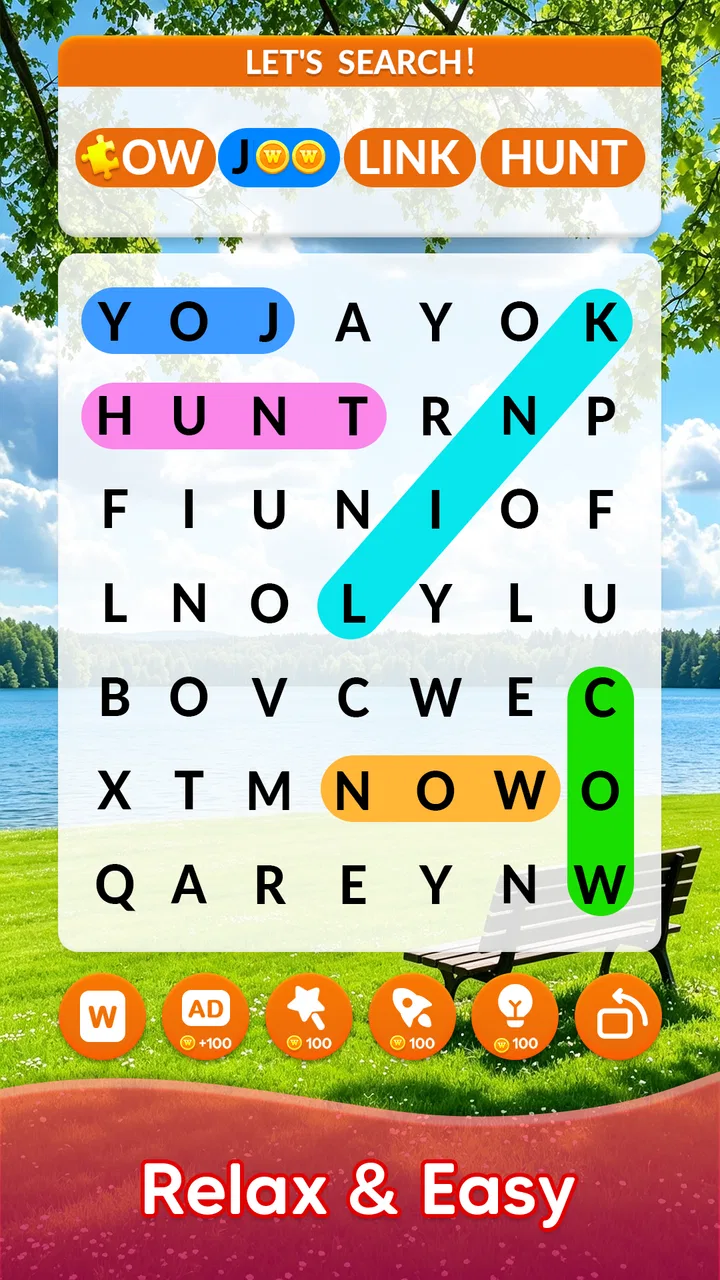
The opening appeal comes from the low barrier to entry. Word Search does not ask me to memorize complicated controls or manage several resources before I can enjoy a round. I look across the letter grid, search for the target words, and mark the discoveries. That makes it suitable for a spare moment on a commute, during a waiting room visit, or at the end of the day when I want something calmer than an action game.
You May Also Like

 Blood Strike: 2.5 Anniversary
Blood Strike’s Loadouts Turn Every Drop Into a Tactical Gamble
A close look at Blood Strike’s custom loadouts: how fast access to signature weapons reshapes its battle royale rhythm, rewards preparation, and narrows the gap between fights.

 Pandora - Music & Podcasts
Pandora’s Music Is Easy to Start, but Harder to Recover
Pandora’s strength is its low-effort path from a seed to a station. Its weak spot is how much confidence it asks you to place in connection, setup, and quiet recovery.

 8 Ball Pool
 Is Built on Rivalries, Rematches, and Routine
A close look at the rivalries, rematches, shared routines, and unanswered safety questions that turn a quick pool match into a persistent mobile community.

 Samsung Music
’s Quiet Strength Is Playing What You Already Own
Its reach comes less from spectacle than from dependable access to a personal library. That simplicity is both the app’s strongest retention engine and its ceiling.

 AccuWeather: Weather Radar
AccuWeather Review: A Quick, Clear Forecast for Everyday Decisions
For everyday plans, the best forecast is the one you can understand quickly. AccuWeather makes rain timing, radar, and local conditions easy to act on, with a few trade-offs.

 Hill Climb Racing
Why Hill Climb Racing Still Turns Crashes Into One More Run
A tiny car, a bumpy hill and one more upgrade: Hill Climb Racing keeps resurfacing because its simple chaos makes every near-miss feel personal.
More From Our News Desk



I also like that the format encourages a different kind of attention from ordinary phone use. Instead of reacting quickly to notifications or tapping through a stream, I have to slow down and inspect relationships between letters. Sometimes I scan horizontally first, then check vertical and diagonal lines. On another puzzle, I reverse the process and look for unusual letter combinations. This small shift in approach keeps the basic activity from feeling completely automatic during the first sessions.
The game is listed for Everyone, so it is approachable as a shared casual activity. A child can understand the central idea, while an adult may use the same game as a gentle vocabulary exercise or a way to stay mentally occupied. I would still treat the age label as a broad guide rather than a promise that every player will find it equally engaging. People who dislike word puzzles will not suddenly enjoy them because the presentation is simple.
It is also reassuring that the game is free to start. That makes trying it low-risk, especially if you are comparing it with other word-search titles. The presence of in-app purchases, ranging from $0.99 to $49.99 per item, means I would recommend checking the purchase flow carefully before handing the device to a child or leaving payment settings unrestricted. The free entry point is useful, but “free” does not mean every optional element has no cost.
A practical routine for new players
My best early-session tip is not to search randomly. I first identify the shortest or most distinctive word, because unusual letters are easier to track across the grid than common ones. Once I find one word, I use the remaining letters around it as visual anchors instead of restarting my scan from the top-left corner. This makes the board feel less cluttered and reduces the temptation to tap every possible line.
Another helpful habit is to change scanning direction when I get stuck. If I have spent too long checking rows, I move to columns and diagonals rather than staring harder at the same area. That sounds obvious, but it matters in a game where frustration usually comes from repeating one ineffective search pattern. I found the experience more relaxing when I treated each puzzle as a visual observation task instead of a test I had to finish quickly.
That approach also shows who will enjoy the game most. It works well for players who like recognizable rules, gradual concentration, and the small satisfaction of completing a visual hunt. It is less suitable for someone who needs a strong story, character progression, tactical choices, or a reason to return beyond the next puzzle. Word Search is intentionally narrow, and that narrowness is both its comfort and its limitation.
Does it keep earning attention after the novelty?
The first few days are helped by familiarity. Most people already know what a word-search puzzle is, so the game can deliver its main activity immediately. The question is whether that activity remains rewarding once the initial curiosity disappears. In my experience, it can, but only when I use it as a small recurring habit rather than expecting it to become my main game.
I get more value from it when I assign it a specific place in my day. A short session with coffee feels more sustainable than opening it repeatedly whenever I am bored. The game then becomes a mental reset: I spend a little time searching, finish when my attention drops, and move on. This is a better long-term relationship than trying to force extended sessions from a format designed around a single repeated activity.
For vocabulary practice, the benefit is modest but real. Finding a word makes me look at its spelling and position, and that can reinforce recognition. However, I would not present it as a full language-learning replacement. A dedicated vocabulary app will usually offer definitions, pronunciation, structured lessons, or progress tracking that a straightforward word-search experience does not provide. I see this game as a supplementary exercise, not a complete educational program.
It can also work well for households that want a non-competitive phone activity. Two people can take turns searching the same puzzle or compare how they approach the grid without needing fast reflexes. That said, the game is not the right choice if you want a substantial multiplayer experience, live competition, or a rich social layer. Its appeal comes from solitary concentration and simple shared play, not from a large community system.
How it compares with familiar alternatives
Compared with crossword games, Word Search asks less from the player’s general knowledge. I do not need to solve clues or produce answers from memory; I need to recognize words hidden in a visual arrangement. That makes it easier to enter when I am tired, but it also means there is less room for deduction and interpretation. If I want language practice that challenges definitions and recall, a crossword-style game is likely the stronger option.
Compared with anagrams or word-building games, this one feels less strategic. An anagram game may reward planning around letter values, limited moves, or board effects. Here, the main skill is visual scanning and persistence. I prefer Word Search when I want a quiet pace, while I choose a word-building alternative when I want decisions to have a more obvious effect on the outcome.
It also differs from endless arcade games in an important way: it does not depend on reflexes. That makes it more comfortable for relaxed play and for people who find rapid tapping tiring. The trade-off is that it may feel passive to players who need constant novelty. The game earns repeat visits through the pleasure of spotting words, not through dramatic changes in mechanics.
The developer, Solitaire Card Studio, gives this word game a clear identity despite the developer name suggesting a different kind of casual entertainment. I would not install it expecting solitaire features or a card-game collection. I would install it specifically for the word-search format. That distinction matters because the title and category set a fairly focused expectation, and the experience is best judged on how well it supports that focus.
What maintenance does it require?
The maintenance burden is low in the everyday sense. I do not need to build a complicated deck, remember a long upgrade path, or manage a daily schedule to keep playing. I can leave it for a week and return without feeling that I have fallen behind. That is a genuine advantage for a casual puzzle game: it respects irregular play rather than punishing me for having other things to do.
There is, however, a difference between low maintenance and unlimited freshness. A game with one central activity can become predictable if I play for long stretches every day. I avoid that by keeping sessions short and alternating it with other kinds of puzzles. When I return after a break, the simple format feels welcoming again. When I overplay it, the same simplicity can start to feel repetitive.
The current version is v1.0.21, and the game runs on Android 7.0 or later. That broad compatibility makes it practical for people using older Android devices instead of requiring a recent phone. I would still keep the app updated when a new version is available, because casual games can benefit from fixes and adjustments even when the core rules remain unchanged. The important point for long-term use is that the technical entry requirement is not especially demanding.
Storage and attention are also forms of maintenance. I would keep notifications limited if the game offers them through the device’s normal app controls, because a relaxing puzzle loses some of its appeal when it becomes another source of interruptions. I would also review purchase protections before letting younger players use it. Those two small steps make the experience easier to keep in a household over time.
For someone choosing between several similar games, the practical question is not only which one looks nicest on the first day. It is which one can sit on the phone without demanding constant care. Word Search does well here because I can return on my own schedule. Its weakness is that low maintenance also means there may be less of a structured reason to come back than in a game built around lessons, streaks, or long-term goals.
Where fatigue starts to appear
The main source of fatigue is repetition in the central action. Searching rows, columns, and diagonals is satisfying in small doses, but the pleasure can flatten when every session asks for the same type of attention. I noticed this most when I tried to extend a short break into a long play session. The game did not become difficult in an interesting strategic way; it simply became harder to stay mentally fresh.
That does not make the design poor. It means the game has a natural session length. I would rather respect that limit than judge it against a puzzle game designed for extended problem-solving. A useful rule is to stop after I begin scanning without really seeing anything. Continuing at that point usually turns a relaxing activity into a chore, and taking a break makes the next session more enjoyable.
Another possible friction is the gap between casual and demanding players. If the puzzles feel too easy, there may not be enough depth to hold someone who wants a serious challenge. If they feel difficult, the solution is usually more careful searching rather than a new strategic tool. Players who enjoy learning complex systems may find that limitation disappointing. The game’s challenge is primarily about attention, not about building a sophisticated plan.
The purchase range is another reason I would approach long-term use thoughtfully. The game costs nothing to begin, which is helpful, but optional items can add up if I buy them impulsively. I would decide in advance whether I am comfortable spending anything and use device-level purchase controls where appropriate. That keeps the free-to-try model from becoming an accidental source of household friction.
I would also skip it if my priority is a fully guided learning experience. Although word searches can support spelling familiarity and concentration, the format does not replace a structured course or a dedicated brain-training program. Likewise, people who want story, character development, or a deep achievement system should look elsewhere. Choosing the right expectations is the easiest way to avoid disappointment.
Three ways to make the routine last
- Use it as a transition activity: I get more value from a short puzzle before work, after lunch, or before bed than from treating it as an all-evening game.
- Change the search order: I alternate between finding distinctive words first and scanning by direction, which prevents one familiar method from becoming dull.
- Pair it with a real goal: I can use a session as a spelling warm-up, a screen break, or a quiet shared activity, rather than opening it without knowing why.
These habits do not add new mechanics to the game, but they change how sustainable it feels. The strongest long-term use case is not endless progression. It is reliable availability when I want a calm, self-contained puzzle that does not require preparation.
My long-term verdict
Word Search earns space on my phone if I treat it as a compact word puzzle rather than a complete entertainment platform. Its free price, Everyone rating, familiar rules, and compatibility with Android 7.0 or later make it easy to try. The strong reception is also notable: it holds a 4.8 average from around 37 thousand ratings, with more than 1 million installs. Those figures suggest that the straightforward format connects with a broad casual audience, although popularity alone cannot decide whether it suits my habits.
I would recommend it to someone who wants a low-pressure way to focus, especially if they enjoy visual searches and prefer games that can be paused without consequences. It is also a sensible choice for families looking for an accessible word activity, provided purchase settings are handled responsibly. The game’s best quality is its dependability: I know what kind of attention it asks for, and I can return whenever I want without rebuilding progress or relearning rules.
I would not recommend it as the only puzzle game on a device. Over time, the repeated search pattern can lose energy, particularly for players who need evolving challenges or more meaningful decisions. A crossword game is better for clue solving, an anagram game is better for word construction, and a structured learning app is better for measurable language development. Word Search wins when relaxation and immediate accessibility matter more than depth.
My final view is positive but specific. This is not a game I would keep open for hours, and it does not need to be. Its lasting value comes from fitting neatly into small moments: a few minutes of concentration, a break from faster entertainment, or a gentle activity to share. The best reason to keep it installed is its dependable simplicity, not the promise of endless novelty. If that sounds like the kind of habit you want, Solitaire Card Studio’s Word Search is worth trying. If you need a richer progression system, choose a more ambitious word game instead.
FAQs for Word Search
01What is Word Search, and how does it work?
Word Search is a puzzle game where players find hidden words in a grid of letters. The words can be placed horizontally, vertically, or diagonally. Players select the words by swiping or tapping across the letters. The game offers various difficulty levels, themes, and categories to enhance the challenge and enjoyment.
02Is Word Search available offline?
Yes, Word Search can be played offline, making it a great option for entertainment on the go. Once downloaded, players can access puzzles without an internet connection. However, certain features like leaderboards or in-app purchases may require online access.
03Does Word Search have any in-app purchases?
Word Search offers optional in-app purchases. These may include hints, additional puzzle packs, or ad removal. While the base game is often free, these purchases can enhance the gaming experience. Players can enjoy the game without spending money, but options exist for those who want to customize their experience.
04What age group is Word Search suitable for?
Word Search is suitable for all ages, from children to adults. The game helps improve vocabulary, spelling, and cognitive skills. With customizable difficulty levels, it can be tailored to fit various age groups and skill levels, making it an educational and fun activity for the entire family.
05Are there different themes or categories in Word Search?
Yes, Word Search offers a variety of themes and categories to keep the gameplay fresh and engaging. Players can choose from categories like animals, geography, sports, and more. These options allow players to tailor their experience and challenge themselves with topics they find interesting.
Pros
- Engaging puzzles with varying difficulty levels.
- Clean and user-friendly interface.
- Offline play available for convenience.
- Daily challenges boost replay value.
- Supports multiple languages for wider reach.
Cons
- Ads can be intrusive between puzzles.
- Limited hints available without purchase.
- No multiplayer mode for competitive play.
- Repetitive music can become annoying.
- Some puzzles may feel too easy for experts.

Word Search
Gallery